

Flexibility and Bike Fit: Self-Test, Body Zones and Handlebar Height
Updated · Written by Stas Bashylov, Ihor Twin
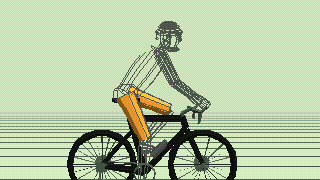
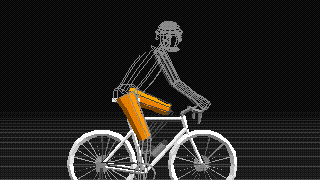
Body zone
Flexibility setting
- Torso
- 53°
- target, same for every setting
- Comparison band
- 51–55°
- average: no shift
- Hip at top of stroke
- 73°
- shown, not judged
Tight hamstrings mostly limit how low you can set the bars. In 96 road cyclists, hamstring flexibility changed pelvic tilt a lot in a floor reach test, but on the bike pelvic tilt was about the same in every group (34–36°). A study of 50 cyclists linked better hamstring flexibility with a lower handlebar.
Example gravel rider, 178 cm, Competition level, at the calculator’s target of 53°. The flexibility setting moves neither the bars nor the target: it shifts the band the position check compares you against, low by up to +3° and high by up to −2°. That is FitInspector’s rule, not a published one. The band keeps its width and stays inside the 50–58° range, so the shift is often smaller, and at the Comfort and Professional levels the band does not move. On a road bike the riding level picks the range instead.
The bike fit calculator asks for your flexibility. This guide explains what that means on a bike, how to estimate it at home with a helper, and what the setting changes in your result. The short version: in studies, flexibility mostly decides how low you can comfortably hold the handlebar, not where your saddle goes.
What flexibility means in a bike fit
On a bike you sit with your hips bent and lean forward to the bars. How far you can lean without strain depends mostly on the backs of your thighs (the hamstrings), your lower back and, with a low front end, your neck.
Studies of trained road cyclists found something surprising. In a floor reach test, riders with tight hamstrings tilted the pelvis forward much less than flexible riders. On the bike, though, the pelvis was tilted about the same in every group, 34–36° (Muyor et al. 2011, 96 riders; Muyor et al. 2024, 14 professionals). One likely reading is that riders set up the bike around their flexibility instead of forcing the pelvis further, but the studies did not test that directly.
How to estimate your flexibility
The simplest test with a published grouping is the passive straight-leg raise. You need a helper and a few minutes.
- Lie on your back on the floor with both legs straight.
- Your helper slowly lifts one leg, keeping the knee straight, while your other leg stays flat on the floor.
- Stop when you feel a firm stretch behind the thigh or your pelvis starts to lift.
- Estimate the angle between the leg and the floor; a level app on a phone held against the shin helps. Repeat with the other leg.
| Leg angle from the floor | Choose |
|---|---|
| Under 80° | Low |
| 80–90° | Average |
| Over 90° | High |
Four body zones and what each limits
Hamstrings
The muscles behind the thigh link the pelvis to the knee. When they are tight, leaning forward pulls the pelvis back, so a low handlebar is harder to reach and to hold. In 50 trained cyclists, better hamstring flexibility went with a more forward-rotated pelvis and a greater handlebar drop (Holliday & Swart 2021).
Lower back
If the hips cannot bend further, the lower back bends more instead. A review of 8 studies linked lower handlebars with more lumbar flexion, and cyclists with low back pain flexed the lumbar spine more (Streisfeld et al. 2017).
Neck
The lower your torso, the further you tilt your head back to see the road. In a lab study of 8 riders, low bars increased upper neck extension, and the load at the base of the neck was about 3 times that of sitting upright (Kolehmainen et al. 1989). Pain was not measured.
Hip flexors
At the top of the pedal stroke the angle between your torso and thigh is at its smallest, and a lower torso closes it further. The scene shows this angle from the fit constructor’s model, but no study gives a target for it or links a hip-flexor test, such as the Thomas test, to bike position.
What the Flexibility setting changes in the calculator
The setting does not change your target torso angle. It shifts your personal torso-angle band, the window your position is compared against: low moves it up to 3° more upright, high up to 2° lower, and average leaves it where it is. The band keeps its width, always stays inside your discipline’s range and never moves by more than half its width, so the real shift is often smaller. It moves most at the Competition level (gravel: low +2°, high −1°); at Sport low hardly moves it, and at Comfort and Professional it does not move at all. On a road bike it works differently: the riding position level picks the range, and flexibility does not move it.
If you choose low flexibility with the Competition or Professional level, the result warns that the position may be hard to hold. You can check your torso angle against the band with the position check; torso angle in bike fitting explains the ranges.
What to change if you are not very flexible
- Raise the front end first. More spacers, a stem with more rise or a shorter stem make the bars easier to reach. The handlebar is the setting flexibility is linked to in the studies.
- Keep the saddle where the calculator puts it. In 32 experienced road cyclists, hamstring flexibility was not linked to the saddle height they had chosen (Hynd et al. 2014), and we found no study that supports lowering the saddle for tight hamstrings. Check your knee angle with the position check instead.
- Lower the bars in small steps. If you work on your flexibility, bring the bars down gradually and re-check your torso angle after each change.
What we do not know
- The studies are small and cross-sectional (14 to 96 riders), mostly trained male road cyclists. They show links, not cause and effect.
- No study gives a target torso angle, handlebar drop or saddle height for a given flexibility score.
- In 15 young off-road riders aged 13–16, better sit-and-reach scores went with less pressure on the front of the saddle (Vicari et al. 2024). That is one small group, and saddle pressure is not a fit target.
- The straight-leg-raise bands come from one study’s grouping, not from a fitting standard.
Frequently asked questions
Should I lower my saddle if my hamstrings are tight?
What if I do not know my flexibility?
Will stretching let me ride lower?
Sources
- Muyor JM, Alacid F, López-Miñarro PA. Influence of hamstring muscles extensibility on spinal curvatures and pelvic tilt in highly trained cyclists. Journal of Human Kinetics. 2011;29:15–23. Link
- Muyor JM, López-Miñarro PA, Alacid F, López-Plaza D. Degree of hamstring extensibility and its relationship with pelvic tilt in professional cyclists. Applied Sciences. 2024;14(9):3912. Link
- Hynd J, Crowle D, Stephenson C. The influence of hamstring extensibility on preselected saddle height within experienced competitive cyclists. Journal of Science and Cycling. 2014;3(2):22. Link
- Holliday W, Swart J. Performance variables associated with bicycle configuration and flexibility. Journal of Science and Medicine in Sport. 2021;24(3):312–317. Link
- Streisfeld GM, Bartoszek C, Creran E, et al. Relationship between body positioning, muscle activity, and spinal kinematics in cyclists with and without low back pain: a systematic review. Sports Health. 2017;9(1):75–79. Link
- Kolehmainen I, Harms-Ringdahl K, Lanshammar H. Cervical spine positions and load moments during bicycling with different handlebar positions. Clinical Biomechanics. 1989;4(2):105–110. Link
- Vicari DSSS, Patti A, Giustino V, et al. Hamstring and lower back muscles flexibility as predictor of saddle pressures in young off-road cyclists. Frontiers in Sports and Active Living. 2024;6:1472550. Link